Volativity is the technical journal focused on the study of gas motion, combustion efficiency, and the engineering of high-speed propulsion systems.
Explore the frontier of engineering through in-depth analysis, simulations, and applied research in the fields of thermodynamics and fluid dynamics.
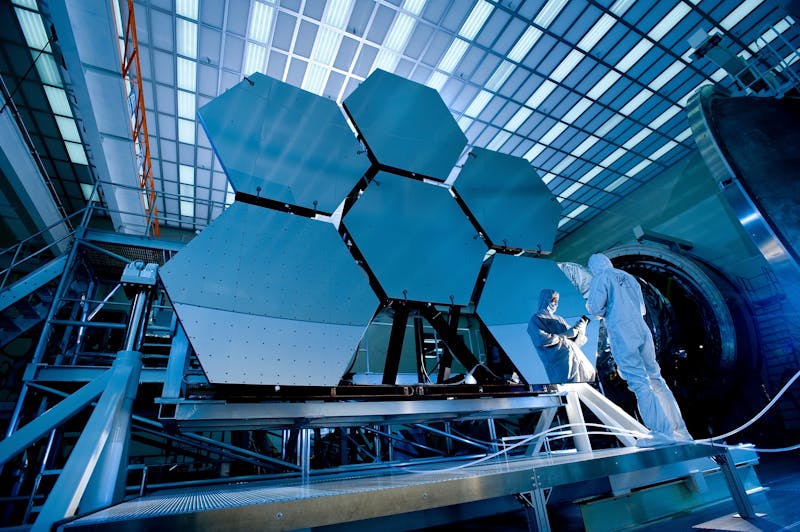
Numerical simulation of turbulent flow
Illustrative images of research in the field. Source: Pexels.
We are recognized by top specialists and organizations for our rigorous research in applied fluid dynamics and thermodynamics.
"Volativity provided the most precise combustion simulations for our turbine project. Their scientific rigor is impressive."
Chief Engineer, AERO-TECH
"Their fluid dynamics analysis optimized our system's efficiency by 18%. An essential resource for any serious engineer."
Research Director, PROPULSION
"Volativity's technical publications are the foundation for our new prototype development. Remarkable clarity and depth."
Founder, THERMO-X
Clear answers to the most common questions about our field of study and activity.
It is the branch of engineering that studies the behavior of moving fluids (gases, liquids) and their interaction with solid surfaces. Applications include propulsion system design, aerodynamic flow optimization, and combustion process modeling.
Efficiency is evaluated through parameters such as complete combustion rate, maximum temperature reached, generated pressure, and residual emissions. Methods include CFD (Computational Fluid Dynamics) simulations and experimental tests on specialized test benches.
Thermodynamics provides the fundamentals for understanding energy transformations, heat transfer, and fluid states under extreme pressure and temperature conditions, essential for designing jet engines, rockets, and aerodynamic tunnels.
Research and technical articles are published in the periodic editions of our journal. For access to the archive or subscription information, please consult the dedicated section on the site or contact us at info@volativity.com.
Common simulations include turbulent flow analysis (RANS, LES), combustion modeling with chemical reactions, conjugate heat transfer, and fluid-structure interaction. The choice of method depends on the problem scale and desired accuracy.
Can't find the answer? Contact our technical team.
We analyze the fundamental differences between our approach and conventional solutions.
Our algorithms solve the Navier-Stokes equations for transonic flows with an accuracy unmatched by standard commercial solutions, which use simplified approximations.
We combine combustion study with heat transfer in a single workflow, eliminating the gap between separate modules used in other publications.
Every study is backed by data from our own wind tunnels and test benches, not just simulations. This is the difference that wins engineers' trust.
Our methodologies are cited and implemented in research projects at technical universities and development centers in the aerospace industry.
Key simulations and diagrams from our applied fluid dynamics and thermodynamics studies.
Visualization of streamlines and velocity profile in a convergent-divergent nozzle.
Thermographic map of a combustion chamber under extreme loads.
Modeling of vortex structures for fuel mixture optimization.
All visualizations are generated with dedicated CFD tools and experimentally validated.
Explore more studies →